BREAKING NEWS!

Who will take care of those who live here?

Recently, you received our email “Kauai Needs New Leaders”. The following is a prime example of either incompetence and/or corruption in the County’s administration and its agencies. The County is known for more than a decade of its plan to expand Kilauea Town yet nothing happened to develop much needed infrastructure to support the 310 new multiplex housing units planned under either of our current or prior Mayors. To commence construction without adequate roads, without potable water and without waste water services creates mess that communities should not have to suffer through while letting contractors benefit to the public’s detriment. 

On May 23, 2026, the State’s monthly Environmental Notice published Notice of a Draft Environmental Assessment (DEA) for the County of Kauai’s Kilauea Expansion Project. The public was given 30 days to review and Comment on the proposed project. The DEA was 115 pages in length.

One of our supporters, Jeffrey Lindner, contacted us. He was concerned about the DEA because it proposed to commence construction on a project that would increase density in Kilauea Town by 310 new multiplex homes on property that was deed restricted/had no water. The plan proposed to increase Kilauea Town’s homes and population by at least 35%. 
The number of homes proposed required construction of a waste water treatment plant. Cesspools are no longer allowed. When 25 or more separate dwelling units are to be built, the State requires them to have to have sewer/waste water treatment plant services. The majority of homes in Kilauea now rely on cesspools.

In the process of reviewing the County’s DEA, Mr Lindner noticed that data relied on by the County to support their claim, of no significant impact, was missing. 

We found that the Table of Contents for the DEA said the Appendices containing the data and studies relied on by the County were “bound separately” and “a copy was available upon request”. 

Mr Lindner challenged the County’s public notice, the DEA, pointing out that if the County’s traffic studies, waste water studies, etc were not available for review, a citizens ability to Comment was undermined. 

As you will see from the following exchange between Mr Lindner and the County, the Appendices weren’t really bound separately but rather there was a link available that included the entire DEA, a document that was 551 pages in length. As a result of Mr Lindner’s Comments, the County has decided not to act further on the DEA. Their will not be a Final EA – FONSI (Finding Of No Significant Impact) for the May 23, 2026 release. The County admits they need to redo and re-release a second DEA that includes all pertinent information as legally required.

How does this happen? How do our Directors of Housing, Planning and Public Works arrange for a document to be released by the State for a 30 day period for public review and comment, when it is missing 80% of its content? Are they satisfying their duty as public servants to protect our quality of life and the environment or are they trying to cram in and begin construction of developments where vital infrastructure is non existent (potable water, adequate roads and waste water/sewer services)? 

Our County is not helping itself or its residents when it plays “hide the ball”. When the next DEA is released, hopefully with all pertinent data as even the County admits there is still data missing even from the 551 page document, we will forward it for your review. This affects the entire island, residents and visitors alike going to Kilauea. If construction had started as planned, the congestion on the narrow Kilauea Road would have increased and traffic in general would have been impacted by trenching by drilling for the planned new well, trenching transition lines, siting and constructing a new waste water treatment plant. 

We strongly encourage your review of the following exchange that absolutely exposes a total failure in the operation of our responsible County agencies.

Mahalo Nui,
Bridget Hammerquist, President
Friends of Maha`ulepu, a 501(c)(3)
PO Box 1654, Koloa, HI 96756
Donate
friendsofmahaulepu.org

From:lindnerji <lindnerji@gmail.com>
Date:Mon, 29 Jun 2026 08:54:46 -1000
Subject:Follow Up to Comment on Kilauea Town Expansion Project – Section 201H Affordable Housing – Draft EA (AFNSI) TMK(s) (4) 5-2-005:024; (4) 5-2-005:054; (4) 5-2-005:058; (4) 5-2-005:059 (por.); and (4) 5-2-023:031 (por.)
To:Bridget Hammerquist <bridgethammerquist@hawaiiantel.net>, Lance D. Collins, Ph.D <lawyer@maui.net>, Bianca Isaki <bianca.isaki@gmail.com>, Ryan Hurley <ryan@rdhlawhi.com>, Avery Youn <averyyoun@gmail.com>

From: William Bow<wbow@kahewai.com>
Date: Mon, Jun 29, 2026 at 8:24 AM
Subject: Re: Follow Up to Comment on Kilauea Town Expansion Project – Section 201H Affordable Housing – Draft EA (AFNSI) TMK(s) (4) 5-2-005:024; (4) 5-2-005:054; (4) 5-2-005:058; (4) 5-2-005:059 (por.); and (4) 5-2-023:031 (por.)
To: lindnerji <lindnerji@gmail.com>
Cc: DBEDT OPSD Environmental Review Program <dbedt.opsd.erp@hawaii.gov>, Steven Franco <sfranco@kauai.gov>, Adam Roversi <aroversi@kauai.gov>, councilmembers@kauai.gov <councilmembers@kauai.gov>

Good morning Mr. Lindner,

Thank you for your review and feedback.

Currently, we are requesting that the consultants who prepared the reports in the appendices make them ADA compliant, so we are able to re-publish the full DEA in The Environmental Notice. It will take some time to complete this task, but we assure you that the full DEA will be made available to the public for an additional 30-day comment period.

It should be noted that the republished version will only include the appendices in ADA format along with the original DEA. Comments received in the initial publication will not be included until the comment period ends in the republished version. 

If you would like project updates, then let me know if we can add you to the email list. I also encourage you to visit the County’s project website for additional information:

https://www.kauai.gov/Government/Departments-Agencies/Housing-Agency/Kilauea-Town-Expansion

Sincerely,

William F. Bow, M.S.
Principal Investigator
2855 East Manoa Road, Suite 105, #316
Honolulu, Hawaii 96822
Direct: 808-371-0676
www.kahewai.com
Book time to meet with me

This message is intended solely for the recipient identified above and should not be opened, read, or utilized by any other party. This message is intended above and shall not be construed as official project information or direction except as expressly provided in the contract documents.


From: lindnerji <lindnerji@gmail.com>
Sent: Saturday, June 27, 2026 5:23 PM
To:dbedt.opsd.erp@hawaii.gov <dbedt.opsd.erp@hawaii.gov>; sfranco@kauai.gov <sfranco@kauai.gov>; aroversi@kauai.gov <aroversi@kauai.gov>; councilmembers@kauai.gov <councilmembers@kauai.gov>; William Bow <wbow@kahewai.com>
Subject: Follow Up to Comment on Kilauea Town Expansion Project – Section 201H Affordable Housing – Draft EA (AFNSI) TMK(s) (4) 5-2-005:024; (4) 5-2-005:054; (4) 5-2-005:058; (4) 5-2-005:059 (por.); and (4) 5-2-023:031 (por.)

Jeffrey Lindner
5066 Aliomanu Road
PO Box 518
Anahola, HI  96703

6/27/2026
Mary Alice Evans, Director
Environmental Review Program
Office of Planning and Sustainable Development
235 South Beretania Street, Suite 702
Honolulu, HI 96813
Sent via email: dbedt.opsd.erp@hawaii.gov
Adam Roversi, Director
Kauai County Housing Agency
4444 Rice Street, Suite 330
Lihue, HI 96766
Sent via email: sfranco@kauai.gov / aroversi@kauai.gov
William Bow
Kahewai Environmental LLC
2855 Manoa Road, Suite 105
Box 316
Honolulu, HI  96822
Sent via email: wbow@kahewai.com
RE:  Follow Up to Comment on Kilauea Town Expansion Project – Section 201H Affordable Housing – Draft EA (AFNSI) TMK(s) (4) 5-2-005:024; (4) 5-2-005:054; (4) 5-2-005:058; (4) 5-2-005:059 (por.); and (4) 5-2-023:031 (por.)
Please accept this follow up to my Comment on the Draft Environmental Assessment (“DEA”) for the proposed Kīlauea Town Expansion Project.

I have received additional information since my Comment was filed. I obtained an electronic link from the consultant for the DEA with all Appendices. The DEA released by the State, at the County’s request in the Environmental Notice of May 23, 2026, is 115 pages in length. When I couldn’t find critical data and testing for water source, traffic counts and road improvements, I tried to access the Appendices referenced in the DEA but found all but Appendix A missing.

When I reviewed the table of contents again, I found a note stating that Appendices B through G had been “bound separately” and a copy was available “upon request”.  Since filing my comment, I learned the Appendices were electronically available, and were not “separately bound” as represented.

Since then, I obtained an alternative link from the consultant which is 551 pages in length. Eighty percent of the County’s DEA was withheld from me and the public. The public comment period needs to be renewed with a second DEA. There is no way my Comment or anyone else’s Comment could be based on a review of the actual DEA. As more fully developed below, even the 551 page consultant’s DEA, which purports to include the missing Appendices B through G,  reports that there is additional data and study information yet to be provided:

William Bowʻs link “Kilauea Town Expansion – Draft EA (for webpage) 2.pdf

”A. TRAFFIC COUNT DATA (TO BE INCLUDED IN DRAFT FINAL)
B. LEVEL OF SERVICE CRITERIA (TO BE INCLUDED IN DRAFT FINAL)
C. LEVEL OF SERVICE CALCULATIONS (TO BE INCLUDED IN DRAFT FINAL)”
Page 469, William Bowʻs link to DEA with Appendices

Right now the 551 page DEA contains blank pages where the missing information will ultimately go.

The 115 page DEA released with the Environmental Notice addressed critical issues with infrastructure; water, sewer, traffic, community impact, view planes etc., claiming they would be resolved, without providing specific data or timelines as to how or when. In their 115 page document, the County recognizes critical impacts to the Kilauea community but then suggests that they will all be resolved without offering specifics as to how, why or when.

The recently released William Bow link does not cure the fact that 80% of that document was not released during the 30 day public Review and Comment period. Studies, maps, drawings and over 400 pages of content  were not included in the release May 23, 2026.

While there is much more information in the consultant’s link, even the current link claims critical data will not be available until the release of the “Draft Final”.  Once the Comment period closed on the DEA, June 22, 2026, the next document anticipated by the public is a Final EA that responds to and hopefully resolves the environmental impacts/Comments. I am not aware of any “Draft Final” that the public would be privy to. That sounds like a document that would go from the consultant to the County as the Final Environmental Assessment (FEA) is being prepared.

Finally, the 551 page document is difficult to follow because while it purports to include Appendices B through G, it also labels exhibits within an Appendix as an Appendix rather than calling it exhibits, or giving it a distinct identification. For example, the 551 page document has multiple Appendix Fs, see pages 462 and page 469 which cover different subjects and issues.

I look forward to the second publication of the DEA with clarification of the documents included so a Comment responsive to the information in the additional 400+ pages can be submitted.

Sincerely,
Jeff Lindner

From:lindnerji <lindnerji@gmail.com>
Date:Sun, 21 Jun 2026 19:11:05 -1000
Subject:Comment on Kilauea Town Expansion Project – Section 201H Affordable Housing – Draft EA (AFNSI) TMK(s) (4) 5-2-005:024; (4) 5-2-005:054; (4) 5-2-005:058; (4) 5-2-005:059 (por.); and (4) 5-2-023:031 (por.)
To:dbedt.opsd.erp@hawaii.gov, sfranco@kauai.gov, aroversi@kauai.gov, wbow@kahewai.com
Cc:councilmembers@kauai.gov

Jeffrey Lindner
5066 Aliomanu Road
PO Box 518
Anahola, HI  96703

6/20/2026
Mary Alice Evans, Director
Environmental Review Program
Office of Planning and Sustainable Development
235 South Beretania Street, Suite 702
Honolulu, HI 96813
Sent via email: dbedt.opsd.erp@hawaii.gov
Adam Roversi, Director
Kauai County Housing Agency
4444 Rice Street, Suite 330
Lihue, HI96766
Sent via email: sfranco@kauai.gov / aroversi@kauai.gov
William Bow
Kahewai Environmental LLC
2855 Manoa Road, Suite 105
Box 316
Honolulu, HI  96822
Sent via email: wbow@kahewai.com
RE:  Comment on Kilauea Town Expansion Project – Section 201H Affordable Housing – Draft EA (AFNSI) TMK(s) (4) 5-2-005:024; (4) 5-2-005:054; (4) 5-2-005:058; (4) 5-2-005:059 (por.); and (4) 5-2-023:031 (por.)
Thank you for the opportunity to review and comment on the Draft Environmental Assessment (“DEA”) for the proposed Kīlauea Town Expansion Project.

Unfortunately, our comment is limited by the fact that the public did not receive a full copy of the DEA. Rather, the environmental notice which purportedly was informing the public and providing the DEA for Comment published a DEA without including critical Appendices (B-G). The missing Appendices allegedly contain the data the County relied on in the above DEA. According to the DEA Table of Contents, Appendices (B-G) are bound separately and available upon request. It is not clear that these separately bound Appendices would be provided electronically or otherwise. There is a 30 day window to comment. By the time anyone studies the 115 page DEA, and finds the referenced Appendices are missing,  the public is deprived of the required 30 days to review the Appendices content. The only cure for this omission is to publish a second DEA with the appendices included.

While we strongly support the creation of true affordable housing for local families on Kaua‘i, the current environmental document suffers from missing information (County data and study – separately bound elsewhere), critical analytical omissions, deferred determinations, and lack of verifiable baseline data. Critical examples follow, discussed in greater detail within the comment.

The DEA does not include the total daily or monthly water need to support potable consumption, waste water and landscape irrigation for the 310 new homes proposed. Some of the current deeds for the parcels for the project bare significant water restrictions, making the issue of source, storage and transmission a significant deficiency in the DEA, the resolution of which is uncertain, undermining and calling into question the County’s Plan to commence construction in the latter part of 2026. 

Some of the parcels to be included in the housing development were part of a prior CPR, that was later subdivided, creating new deeds. The prior CPR also contained deed restriction provisions regarding water “No Municipal Water Service”. They also stated it was uncertain if water service would ever be available to those properties. The Deed recorded recently for one of the County Housing Project Parcels, TMK (4) 5-2-005-054 (24+ acres) contains the following deed restriction regarding water which also applies to other parcels in the area:

  • “(b) Domestic water service is not available from the Department of Water, County of Kauai. 
  • (c) Prior to the building permit approvals, the applicant shall either complete a Waiver and Release Agreement with the Department of Water, County of Kauai or submit a copy of the Deeds of the log to the Department of Water that states that domestic water service is not available from the Department of Water, County of Kauai.” See page 11 of the Deed (054).
  •  Before the current project parcel was subdivided, the predecessor CPR deeds for lots that were subdivided out, now part of the project parcels, contained the following deed restriction regarding water:
  •  “The Owner is aware and acknowledges that the Property is presently without water or water service from the County.”
  •  “The Planning Commission of the County of Kauai (“Commission”) in Subdivision Application No. S-2018-15 has determined that Lots 11-A-2-B-1 through 11-A-2-B-6, inclusive, of the subdivision of the Property shall not be entitled to domestic water service from the Department of Water, County of Kauai…” (page 2 Predecessor CPR Deed’s Waiver and Release Notice, predecessor to TMK (4) 5-2-005-054).
  • “Although the Owner has no plans at this time to seek building permits from the Building Division of the Department of Public Works of the County of Kauai to develop or construct any improvements to Lots 11-A-2-B-1 through 11-A-2-B-6, the Owner or the Owner’s successors assigns may desire to commence construction on said lots, knowing that no County-supplied water service of any kind exists and acknowledging and accepting the fact that no County-supplied water service may ever exist at the location.” (See page 2, Waiver and Release Notice, filed August 3, 2021, Recorded with CPR deed lots that now comprise TMK (4) 5-2-005-054) 

The traffic study for Kilauea Town that supported a roundabout construction did not include the traffic flow generated by 310 new homes. In the DEA, the primary access to the project relies on the narrow two lane Kilauea Road and there is no obvious consideration of the impact to the traffic currently required to use the same access for Kilauea town. The DEA also fails to consider the impact to existing traffic or the added traffic from the project once Namahana Foundation School is built and operational with the projected 360 students. What we do know of the Traffic Impact Assessment Report (TIAR), per the DEA is that an “E” grade was given to the traffic flow in the area now, which means traffic in the area is already at capacity. DEA page 66. The project is not under construction, PAL homes are not completed, the Gather Credit Union is not built and Namahana Foundation School has not even begun construction.

While data to support their plan may or may not be contained in the separately bound Appendices not released to the public, it is not clear what the County did or what data they obtained for the project parcels to assure the sustainability of the aquifer expected to provide water to the project. The DEA refers only to an aquifer study for water to a nearby parcel. The DEA did not report that there had been  any study of the project parcels to determine if there is sufficient water for the new well to be constructed and/or sufficient water to meet the project needs. 

The data in the DEA suggests the project’s new waste water treatment plant (WWTP) will service the project. The DEA is unclear as to whether the WWTP will afford current residences, primarily on cesspool, the ability to hook up to sewer, prolonging the negative environmental impact from cesspools. There were 1,093 homes in Kilauea at the end of the 2020 census, the majority of which rely on cesspools. Their lot size precludes construction of ADUs and ARUs because of insufficient land area to add a septic system. It does not appear the County has considered the number of housing units that could be added to the existing community of Kilauea if wastewater/sewer services were made available to existing home sites. These omissions, if not cured, preclude a “Finding of No Significant Impact”.

Before the Kaua’i County Housing Agency (KCHA) under HRS Chapter 343, can file a FEA FONSI, the preceding and following issues have to be reconciled:

COMMUNITY AND CULTURAL CONSULTATION

Inadequate Consultation Scope: The DEA states that 16 individuals were contacted for the Cultural Impact Assessment, but only three participated in formal interviews. See DEA pg. 43. Although those interviewees reportedly supported the project, the County reported their support was based on the need for affordable housing for local families. With only three interviews, there is a serious question as to whether there has been an accurate assessment of the cultural knowledge and community perspectives in Kīlauea. The County should explain how the interviewees were selected, disclose any relationships they may have with the project and describe the consultants’ familiarity with Kīlauea. Additional outreach should be conducted with Native Hawaiian cultural practitioners, neighboring residents and other affected community members before the environmental review is completed.

Omission of Ka Paʻakai Analysis: The FEA should provide enough information so agency decision makers can properly perform a Ka Pa’akai analysis addressing the cultural practices and resources associated with the project area. This DEA fails to explicitly identify the specific cultural practices and resources within the project area, the precise extent to which the project will affect them, and feasible, binding measures taken to protect them. See DEA pgs. 42-45. The County cannot reasonably conclude that cultural effects are insignificant without first conducting an adequate investigation and meaningfully consulting the community. At a minimum any analysis should determine whether Hawaiian rock walls, heiau-related features or other cultural resources are present within the project area. A committee that includes Native Hawaiian cultural practitioners and knowledgeable Kīlauea community members should participate in inspecting and evaluating potential cultural features. The FEA should also explain whether the archaeological investigation adequately covered each project parcel, particularly because the earlier inventory covered a much larger 204-acre area and identified plantation-era irrigation ditches and nearby archaeological features.

Non-Binding Mitigation Measures: The Cultural Impact Assessment recommends a traditional Hawaiian blessing, protection of mauka-to-makai connections and views, reduced light pollution, access to Niu Stream, support for farming and continued communication with the community. See DEA at pg. 45. The FEA should include more than just the statements of what is to be done but also identify more details and which recommendations will become binding mitigation measures, who will implement them, when they will be implemented and how compliance will be monitored. Recommendations alone do not ensure that cultural impacts will be avoided.

INSUFFICIENCY OF THE PROPOSED FONSI

Lack of Evidentiary Support: Before issuing a Finding of No Significant Impact (“FONSI”), the County must adequately investigate the potentially significant effects identified by the community and support its conclusions with evidence. Impacts cannot be found insignificant merely because relevant cultural, water, traffic, infrastructure or land-use questions were not fully examined. Here, the Agency’s draft findings (See DEA at pgs. 73-76) assume a lack of impacts merely because relevant cultural, water, traffic, infrastructure, or land-use questions were left unexamined or deferred to future design phases. Omission of information does not equal evidence of an absence of impact. If the County does not look for cultural resources or assess the full effects of the project, the absence of information cannot be treated as evidence that no significant impact exists.

Vague Regulatory Language: The FEA should identify measurable project objectives and mitigation standards rather than relying on general goals or statements that the County will “encourage,” “consider,” or “strive” to take certain actions. The document repeatedly states the County will “encourage,” “consider,” or “strive” to meet energy, building, and environmental standards (such as LEED Silver). The final FONSI must depend exclusively on specific, funded, and legally binding mitigation standards, not aspirational statements. See DEA at pgs. 12, 15, & 30.

Any FONSI should depend only on measures that are specific, enforceable, funded and capable of being monitored.

PROJECT DESIGN, DENSITY& COMMUNITY FACILITIES

Deferred Elements and To Be Determined “TBD” Parcels: Important project elements remain conceptual or undetermined, including approximately 1.3 acres designated “TBD,” portions of the green space, final architectural details and some drainage facilities. See DEA pg. 10, Tbl. 3 & pg. 12. These matters should be resolved through community consultation before environmental approval rather than postponed until later design and permitting stages.

Cottage Court Duplex Omissions: The conceptual plan includes 36 Cottage Court duplex units, but it provides insufficient information about their design, density, shared spaces, parking and relationship to surrounding development. See DEA pgs. 10 & 12. These details should be developed with community participation before environmental approval.

Civic and Social Infrastructure: The FEA should identify the community facilities that will be provided. Recreational fields associated with Namahana School (See DEA at pg. 53) are not a substitute for a community building or facilities that serve the residents of the new development and the existing town. The County DEA was silent on whether Namahana Foundation was even aware that it would be expected to provide Namahana School’s recreational fields for community use. The County should explain whether a community building is planned and how the project will meet the civic and social needs created by adding approximately 1,069 residents. See DEA at pg. 10.

Construction Quality vs. Affordability: The County should also provide meaningful information concerning construction quality and affordability. The Cultural Impact Assessment suggests tract-style housing and bulk purchasing of materials to reduce costs (See DEA at pg. 44), but the public has not been given enough information about the resulting designs, construction standards, long-term maintenance or actual savings. Affordable construction should not result in inadequate design or lower-quality housing.

GROWTH, COMMUNITY CHARACTER AND SCENIC IMPACTS

Evaluation of Scale and “Modest Growth” Mandates: The project proposes a dense layout of 310 units and commercial spaces on roughly 55 acres. See DEA at pg. 4. The FEA should evaluate whether the scale and density of 310 housing units are consistent with the Kīlauea Town Plan’s vision of modest growth and preservation of the North Shore’s rural and natural character. See DEA at pg. 72. This evaluation should consider surrounding agricultural open space, the transition between the town core and agricultural land and the project’s potential to establish a precedent for additional development.

Visual Analysis and Three-Story Massing: The project will convert undeveloped land into a residential and mixed-use development containing buildings as tall as three stories. The visual analysis should include representative views from neighboring homes, Kūhiō Highway, Kolo Road, the town core and other relevant public viewpoints. It should evaluate outward views from existing homes as well as views into the project site. See DEA at pgs. 45 & 49.

Furthermore, the DEA states that the site is generally level to slightly sloping and that views are limited by vegetation (See DEA at pg. 20), but this does not fully address how three-story buildings will affect the existing community, which are primarily single story. The County should demonstrate how building height, mass, setbacks, landscaping and plantation-style architecture (single story) will preserve Kīlauea’s character and important mauka-to-makai views. It should also identify whether comparable three-story buildings presently exist in the surrounding community.

Enforceability of Design Commitments: The DEA states that later community outreach will occur before completion of the architectural design. See DEA at pg. 49. However, major design decisions should be presented during the environmental review so that the public can evaluate their impacts. Any commitments concerning building height, architecture, lighting, green space, landscaping and view protection should be incorporated as enforceable project requirements.

Wastewater Treatment Plant Aesthetics & Odor: The proposed wastewater treatment plant will be highly visible from Kūhiō Highway, the project entrance and nearby residences. See DEA at pg. 49.  Although the DEA acknowledges this visibility, it relies on possible measures such as vegetation screening and partially burying tanks. These measures should be made specific and mandatory. The FEA should also evaluate odor impacts and demonstrate that the designated site provides enough space for the treatment plant, required buffers, future expansion, access and neighboring residential uses.

The conclusion that there will be no long-term scenic impact is not adequately supported while the final building designs and wastewater-treatment-plant screening remain unresolved. Visual simulations should be provided before this conclusion is adopted.

WATER SUPPLY

Enforceable Water Assurances: The FEA should establish that an adequate and reliable water supply will exist before construction begins. Existing members of the community are already waiting for water service and some accessory dwelling units and other approved housing reportedly cannot be developed because of existing water restrictions. The County should identify the source of water for the project, the construction schedules for the proposed storage tank and new well, the capacity those improvements will provide and how the improvements will be funded.

The FEA states that the new tank and well are expected to coincide with Phase I, but an expectation is not an enforceable assurance. Completion and operation of the necessary water improvements should be required before construction or building permits are issued.

Aquifer Sustainability vs. 10-MGD Shortfall Data: The water analysis should reconcile its conclusion that groundwater use will remain sustainable through 2035 with the Department of Water’s determination that greater storage is needed for projected demand and emergency response. The DEA is silent on water for adequate fire protection/fireflow. It should also address the engineering estimate referenced by commenters of a possible 10-million-gallon-per-day shortfall by 2035, reported by Towell Engineering in the County’s General Plan update, identify the source and assumptions underlying that estimate and explain any difference between that estimate and the EA’s conclusion.

Potable Demand Metrics & Meter History: The FEA should disclose the project’s estimated daily potable-water demand and demonstrate that supplying approximately 310 units will not reduce water availability for existing residents, approved homes, accessory dwelling units or other users already waiting for service. It should identify the capacity of the proposed storage tank and explain whether a 500,000-gallon facility would provide adequate operational and emergency storage.

The County should also explain how the Kīlauea Post Office obtained its water meter, whether that allocation affected residents waiting for service and what that history indicates about current water availability. The EA should explain whether catchment or other alternative supplies are prohibited and, if so, how the lack of those alternatives affects residents who cannot obtain County water.

WASTEWATER FLOW CALCULATIONS & REGIONAL COMMITMENTS

Flow Calculations: The DEA states that Phase I of the wastewater treatment plant will provide 100,000 gallons per day and that this amount will meet the proposed project’s wastewater-treatment needs. See DEA at pgs. 12 & 51. It should provide the calculations supporting that conclusion, including expected residential, commercial, live-work and community-facility flows.

Phasing Infrastructure Timelines: The FEA should specify when each wastewater phase will be constructed and what development each phase will support. It should state whether Phase I must be operational before the first homes are occupied and whether Phase II is required before full project build out.

Regional Solution vs. Speculative Expansion: Phase II would increase total capacity to 400,000 gallons per day and is described as potentially serving the existing Kīlauea community, which currently relies on cesspools and individual wastewater systems. See DEA at pgs. 12 & 25. The DEA does not clarify whether this regional service is a funded and enforceable commitment or only a possible future expansion. The DEA is not clear on the service area, connection requirements, costs to existing residents and responsibility for long-term operation and maintenance.

The County should not describe the system as a regional wastewater solution unless there is a concrete plan and funding to serve the broader community. The FEA should also explain how the wastewater plant will accommodate future demand while protecting nearby residences from visual and odor impacts.

TRAFFIC, TRANSPORTATION AND SCHOOLS

Total Daily Vehicle Omissions: The project will generate an estimated 235 morning, 334 afternoon and 308 Saturday peak-hour trips. See DEA at pgs. 54 & 57-58. The FEA should also disclose the estimated total number of resident vehicles and daily vehicle trips, because peak-hour counts alone do not fully describe the increase in traffic.
The traffic study does analyze Ala Nāmāhana Parkway and intersections along Kūhiō Highway. The central issue is therefore not the absence of a study, but whether its assumptions and geographic scope adequately account for the project’s cumulative effects.

Roundabout Dependency & Internal Congestion: The traffic analysis assumes construction of the Ala Nāmāhana Parkway extension, a new Kūhiō Highway roundabout, two project-access roundabouts and other roadway improvements. See DEA at pgs. 12 & 57-58. The County should explain whether its finding of no significant traffic impact depends on all these improvements being completed before project occupancy. If it does, timely completion of the improvements should be identified better and be an enforceable condition.

Namahana School Cumulative Load: Ala Nāmāhana Parkway is a two-lane road that will serve as a primary route for the project and Namahana School. See DEA at pgs. 7 & 58. The proposed internal roadway will also bisect residential areas and will be shared by vehicles, pedestrians, bicyclists and parked cars. The EA should more fully evaluate congestion, pedestrian conflicts, school traffic, emergency access, parallel parking and the safety of the proposed roundabouts.
The 2037 traffic forecast includes the future Namahana School and assumes an enrollment of 360 students. The FEA should identify the number and timing of school-related trips, distinguish those trips from project-generated traffic and evaluate the combined effect of the school and housing project during morning and afternoon peak periods. The County should not rely on future roadway improvements without demonstrating that they are funded and will be operational when needed.

Multi-modal Safe Infrastructure Termini: The FEA should explain how sidewalks and bicycle paths within the project will connect safely to the existing town, schools, commercial areas and transit stops. Internal paths do not provide meaningful transportation benefits if they end without safe connections to existing community destinations. The FEA must map out exactly how sidewalks and bike paths safely bridge the gap into the existing town core and school access systems.

Bus Service Capacity & Student Routes: The DEA states that the project will be located along existing bus routes and proposes additional bus stops. It should address the adequacy, frequency and capacity of actual service rather than simply identifying nearby routes. In particular, the County should explain whether student bus service between Hā’ena, Kīlauea and Kapa’a will be restored or expanded as population and school enrollment increase.

LAND USE, ZONING AND ENFORCEABILITY

Parcel-Level Rezoning Data: Most of the property is classified as Agricultural at the state level and zoned Agricultural by the County, although the DEA states that a small portion is within the Urban District and zoned R-6. See DEA at pgs. 14 & 64. The FEA should identify these areas clearly on a parcel-level map and disclose the acreage subject to rezoning and a State Land Use District Boundary Amendment.

The FEA analysis should address the loss of agricultural land and open space, including the scenic and community value of the larger agricultural parcels surrounding Kīlauea. It should not rely only on the fact that other agricultural land remains elsewhere on Kauai.

Complete Disclosure of 201H Exemptions: Because the County intends to use the fast track 201H process (See DEA at pgs. 2, 14, 66), the EA should identify every zoning, height, density, parking, subdivision and other exemption that will be requested. The public should not be asked to evaluate the project without knowing which development standards may be waived and which design commitments will remain enforceable.

The County should explain whether any height exemption or variance will be requested for the three-story buildings. Statements that the project will comply with existing height limits should be reconciled with the exemptions available under the proposed 201H process.

Multi-Contractor Accountability: The EA should identify the mechanisms that will ensure that the County and future contractors remain bound by commitments made during environmental review. This is particularly important because different phases may be constructed by independent contractors.

FINANCIAL TRANSPARENCY & PROPERTY ACQUISITION RECORDS

Infrastructure Financial Responsibilities: The DEA identifies an estimated cost of approximately $22 million for Ala Nāmāhana Parkway and approximately $25 million for Phase I and II subdivision infrastructure, while the wastewater-treatment-plant cost remains under development. See DEA at pg. 15. The County should provide updated estimates for the road, water, wastewater, drainage, parks, community facilities and other public infrastructure.

Furthermore, the FEA should identify which costs will be paid by the County, State, federal programs, developers, future homeowners, utility customers or existing taxpayers. The public should be given sufficient information to understand its potential financial responsibility before the project is approved.

Parcel Acquisition and Property Chronology: The County should provide a clear parcel-acquisition history and supporting records for the project property. This should include the reported nominal transfer involving Parcel 031, the sequence of the sale and condemnation documents concerning Parcel 024 and any relevant August 2018 mortgage affecting the approximately 25-acre property. See DEA at pgs. 4 & 6.

The County should identify the parties to each transaction, consideration paid, recording dates, appraisals, public expenditures and authority for any condemnation. A complete chronology and the underlying documents would allow the public to evaluate the transactions based on verifiable records rather than speculation.

CONCLUSION

A legally defensible Finding of No Significant Impact (FONSI) cannot be issued while critical parameters concerning water availability, wastewater capacity, architectural impacts, and cultural protections remain unresolved or hidden under non-binding goals. We request that these  problematic concerns be fully evaluated and disclosed within a revised environmental document (New DEA) before this project proceeds through the entitlement pipeline.

Kauai Needs New Leaders

1. Registered Voters will be receiving their Ballots soon. Voting ballots will be received in your mail soon if you are registered to vote. It’s not too late to register. If unable to register before election day, you can walk in, register and vote the same day at the Kauai County Elections Office, 4386 Rice Street, Room 101, Lihue, HI 96766, Phone: (808) 241-4800, Fax: (808) 241-6207, TTY: (808) 241-5116, Email: elections@kauai.gov 

Think about what the candidates are saying. Are they making empty promises to devote their Office to addressing infrastructure? For example from a quality of life and an environmental perspective, in the 10 years Bernard Carvalho served as Mayor (2008 to 2018):

  • He spent $9,000,000 of County taxpayer for a drug treatment center that never operated as intended. The money spent included 3 consultant studies to determine the feasibility of operating a drug treatment center with 9 beds, expanded to 18 when the consultants said that payments received would not pay to keep the center open. Each study costs thousands of dollars and every study found that operating a drug treatment center with 9 or 18 patients was too small to make it economically feasible… and yet the then Mayor Carvalho built it anyway. Land was gifted from Grove Farm with the understanding that if the center was not operable at the end of 10 years, the property would revert back to Grove Farm. The drug treatment center and all of the land gifted to the County has reverted back to Grove Farm. 
  • Kauai has had an over filled landfill issue for at least the last 20 years. Nearly $750,000 was spent by the County between 2013 to 2018 on studies to find a new site for Kauai’s landfill. Sites chosen included the coffee plantation and a large parcel near Maʻalo Road. After spending nearly $500,00 on an Environmental Study of the Maʻalo Road site, the location was abandoned because the rainfall was more than twice that of Kekaha, raising the issue of ground seepage – was located over an aquifer and was too close to the airport whose flights would be threatened by birds attracted to the landfill. 
  • For more than 20 years including Derek Kawakami’s administration, infrastructure deficiencies from deferred maintenance and unwillingness to secure or commit adequate funding to the island’s critical needs (roads needing repair and routes that need to be added, the delivery of potable water and waster water/sewer service with an affordable option to convert from cesspool to sewer) must be addressed. All of the waste water treatments on the islands are suffering from leaks/spills with untreated waste being released to the ocean from the east to the west side of the island. It’s past time that our administration needs to protect and preserve the environment and our quality of life rather than focus on beautification projects to attract more luxury development. 
  • Many have noticed that our beaches, oceans and marine life are suffering. 
  • It’s time for change.

Please take the time to vote and vote carefully.In an effort to keep us all aware, we share the following:

2. Comments on landfill expansion must be emailed by 4:00 pm Wednesday July 8, 2026 (email address below):


Aloha!

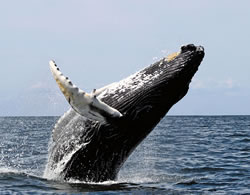
Humpback whales are often seen breaching off the shores of Maha’ulepu during the winter months. FOM is a 501(c)(3) non-profit. Tax I.D. number 47-2596342.

Friends of Maha’ulepu is comprised of a group of concerned citizens (local and beyond) who are contributing their time and talents to protect the natural beauty of this pristine coastal valley.

Maha’ulepu Beach is located on the South Shore of the Island of Kaua’i in the Hawaiian Islands, approximately 3 1/2 miles northeast of the town of Poi’pu.  Poi’pu is one of the major visitor destinations on the island due to it’s beautiful beaches, swimming, snorkeling and surfing, sea turtles, whales, monk seals, trade winds, palm trees, and spectacular sunsets. Learn more about Friends of Maha’ulepu and the work we are doing!


Maui wildfires timeline of failed communicationsFOM is a 501(c)(3) non-profit.

Tax I.D. number 47-2596342.